


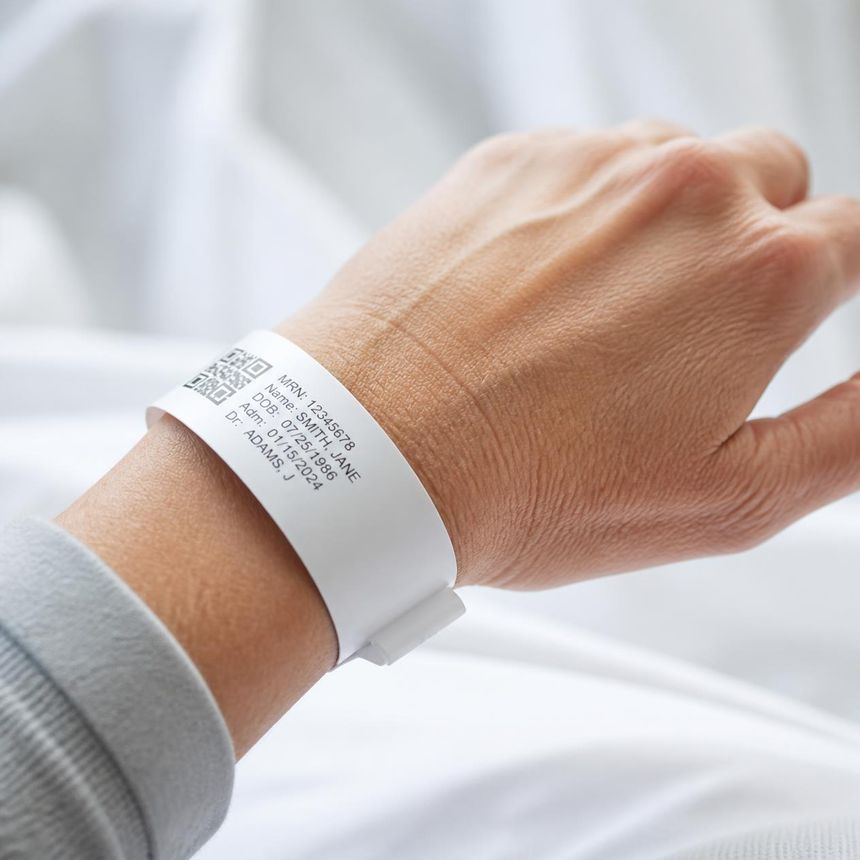
The Court of Justice of the European Union (CJEU, 2 July 2026, Case C-427/24, Diagramm Halbach) has recently issued an important judgment on the scope of the Medical Device Regulation (MDR). While the case itself concerned patient identification wristbands used in hospitals, the Court's reasoning is likely to be of much greater interest to digital health companies, software developers and providers of AI-enabled healthcare solutions.
The decision provides useful guidance on a question that many companies continue to struggle with: When does a healthcare product become a medical device?
The key message
According to the Court, a product qualifies as a medical device only if two conditions are met:
- the manufacturer intends the product to serve a medical purpose; and
- the product is objectively capable of achieving that medical purpose.
In other words, classification under the MDR depends not only on what a manufacturer says about a product, but also on what the product actually does.
This may sound obvious, but in practice it is highly relevant for products operating in the grey area between healthcare support functions and regulated medical devices.
The case in brief
The dispute concerned blank patient identification wristbands marketed for use in hospitals.
The manufacturer argued that the wristbands contributed to patient safety by supporting correct patient identification and helping to reduce medication errors. However, the wristbands were supplied without patient information and did not themselves perform any medical function.
The CJEU concluded that the wristbands were not medical devices. While the manufacturer's intended purpose remains an important consideration, promotional statements alone are not enough. A product must also objectively perform, or be capable of performing, one of the medical purposes recognised under the MDR.
Why digital health companies should pay attention
The practical significance of the judgment goes far beyond hospital wristbands.
Many healthcare technology companies are currently assessing whether products such as the following fall within the scope of the MDR:
- AI-powered clinical documentation tools;
- ambient scribe solutions;
- hospital workflow software;
- patient management platforms;
- clinical decision support systems;
- AI-assisted monitoring and risk detection tools.
For these products, the distinction between an administrative function and a medical function is often far from straightforward.
The judgment reinforces an important principle: healthcare-related marketing claims do not automatically turn a product into a medical device. At the same time, companies cannot avoid MDR requirements simply by describing a product as an administrative or workflow tool if its functionality objectively supports diagnosis, monitoring or treatment decisions.
/Passle/MediaLibrary/Images/2025-03-18-10-30-46-509-67d94b56724f2095cbbe9c3a.jpg)
/Passle/65b10a249576f7f0a5a2f163/MediaLibrary/Images/2026-10-06-16-26-17-233-6ac52129c0138e81a0461a90.png)
/Passle/65b10a249576f7f0a5a2f163/MediaLibrary/Images/2026-08-12-12-22-01-624-6a7c6569372779c65c80df43.png)
/Passle/MediaLibrary/Images/2026-07-28-07-07-54-879-6a68554a2f7f4abc62438be9.jpg)