
Practical steps for manufacturers of medical devices, diagnostics and health software, including US and other non-EU manufacturers selling through EU importers and authorised representatives
At a glance
The EU's new Product Liability Directive (EU) 2024/2853 (“PLD”) applies to medical devices, diagnostics and health software placed on the EU market from 9 December 2026. It fully harmonises product liability across the EU: Member States may not keep or introduce stricter or more lenient rules unless the Directive allows it (Art. 3 PLD). National implementing laws will therefore largely match, with differences mainly limited to procedural aspects. Where national detail matters, we use Germany’s new Product Liability Act (Produkthaftungsgesetz, “ProdHaftG”) as an example.
For medtech companies, the PLD raises the stakes in five ways:
- Unlimited liability: Liability towards injured patients has no upper limit, and contracts can't exclude or cap it.
- Software counts: Apps, AI and cloud services integrated into or connected to a medical device count as its components, and standalone medical device software is a product in its own right. While you can still update the software, you remain liable for defects that arise after sale.
- Your internal files and records become evidence: Courts can order you to hand over internal documents and, if you don't, might presume the device was defective.
- Trade secrets can reach the courtroom: Source code, algorithms and design files stay protected only if you've treated them as secret all along.
- Non-EU manufacturers: Their EU importers and authorised representatives become liable in their own right.
Most of the preparation sits in R&D, quality, regulatory affairs, IT and contracting. Adapting to the new framework can be complex and time-consuming. Exposure is highest for software-driven and AI-supported devices, because liability extends to updates and missing updates, and courts can presume a defect where complexity makes it excessively difficult to prove (for example, where it’s unclear how an AI model reached a diagnosis). Selling into the EU through importers or authorised representatives adds another layer of liability risk. Patients can claim full compensation from either, which will pass the cost back to you, and a court can order them to disclose the technical documentation they hold for you.
Who can claim and for what
Product liability is strict liability: an injured person must prove that a defect in the product caused the damage, whether or not the manufacturer was at fault.
Only individuals can claim, and only for the following types of damage (Arts. 5(1), 6(1) PLD):
- death and personal injury, including medically recognised damage to psychological health;
- damage to property used for private purposes;
- destruction or corruption of data that isn't used for professional purposes.
Business losses, such as a hospital's damaged equipment, stay with contract and general tort law. The Directive therefore matters most where products can injure people, and medtech is at the top of that list: patients are the typical claimants, and injuries can surface years later. For implants, the 10-year cut-off for claims extends to 25 years where an injury only shows up late (Art. 17 PLD).
Germany's previous liability cap of EUR 85 million is removed, and liability towards the injured person can't be excluded by contract (Art. 15 PLD). Devices placed on the market before 9 December 2026 stay under the old rules unless a substantial modification, such as a major software change, turns them into new products (Arts. 2(1), 21 PLD).
Authorised medicines remain subject to Germany's separate drug liability regime under the Medicines Act (§ 21(1) ProdHaftG; § 84 AMG).
Disclosure and presumptions
This is where the Directive changes most. Under the old regime, patients often struggled to prove a defect because the relevant knowledge sat with the manufacturer. The Directive gives them two tools:
Disclosure: Once a patient has sued and made the claim plausible, the court can order the manufacturer to disclose relevant evidence, including documents it first has to compile from existing data, such as an analysis of complaint trends (Art. 9(1) PLD; recital 42). The order is limited to what is necessary and proportionate (Art. 9(3) PLD). In Germany, courts can also order third parties such as hospitals to disclose relevant data (§ 19(1) ProdHaftG).
Presumptions: The court treats a fact as established unless the manufacturer proves the opposite. The court will presume that a device was defective where:
- the manufacturer fails to disclose evidence the court ordered it to disclose (Art. 10(2)(a) PLD);
- the device breaches a mandatory safety requirement meant to protect against the harm suffered, such as a requirement of the EU Medical Device Regulation (“MDR”) (Art. 10(2)(b) PLD);
- an obvious malfunction during normal use caused the damage (Art. 10(2)(c) PLD).
Once a defect is established, the court also presumes that it caused the damage if the damage is typical for that kind of defect (Art. 10(3) PLD). Where the technology is so complex that proof would be excessively difficult, the patient only has to show that a defect or a causal link is likely (Art. 10(4) PLD). The recitals explicitly name "an innovative medical device" and machine learning as examples (recital 48).
A documentation gap therefore has liability consequences on top of potential regulatory exposure: it can decide a liability case.
Trade secrets need protection before a claim arrives
Disclosure orders will often reach what manufacturers guard most closely: source code and firmware, algorithms and model weights, training data and design files. Courts have to weigh confidentiality when framing an order and can restrict access to protected information (Art. 9(4), (5) PLD). German courts can also have an independent expert examine sensitive material, with the other side's access limited to its lawyers (§ 19(4) ProdHaftG).
That protection only covers information that qualifies as a trade secret, which requires reasonable secrecy measures in place before the dispute (Art. 2(1)(c) Directive (EU) 2016/943; § 2(1)(b) of the German Trade Secrets Act [Geschäftsgeheimnisgesetz – “GeschGehG”]). Manufacturers should therefore revisit their trade secret protection framework and inter alia:
- identify per product line what is actually secret (published material such as instructions for use doesn't qualify);
- document secrecy measures, such as need-to-know access and confidentiality agreements with staff and suppliers;
- agree with suppliers, in particular AI model providers, how their material is handled in disclosure;
- prepare redacted versions of core documents and apply for protective measures with the first response to a disclosure request.
Six steps for manufacturers
1. Map your portfolio by how long you stay in control
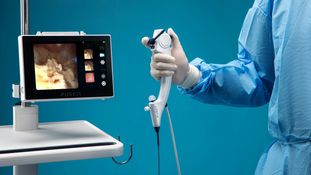
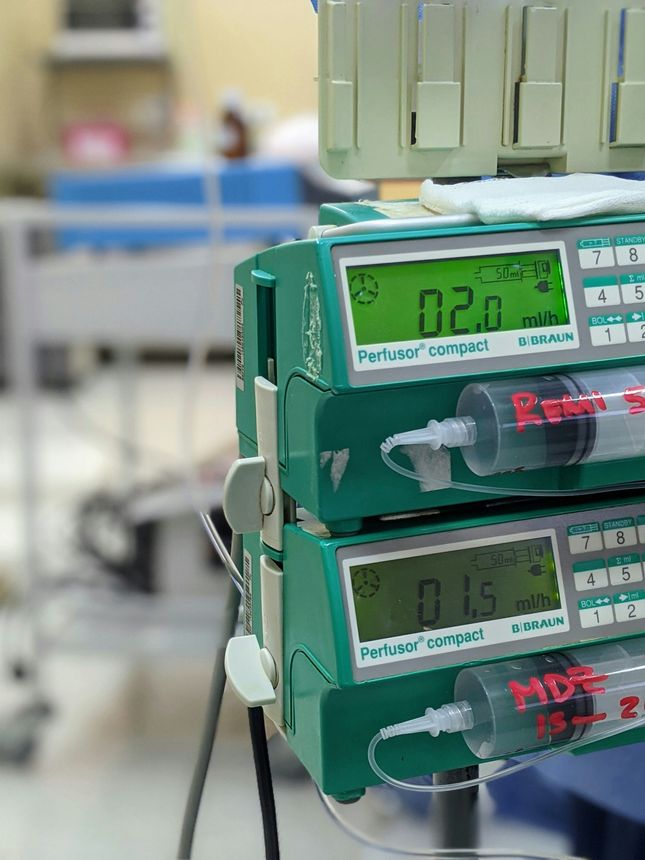
Liability now depends on how long you keep control over a device after sale, mainly through software updates. The longer the control, the longer the exposure. While you control the device, courts assess its safety up to the point it leaves your control, and you can’t argue that a software defect arose after sale (Arts. 7(2)(e), 11(2) PLD). You therefore need records for every software version and update decision over that whole period, which means you need more evidence. Group the portfolio along that line, for example: devices without software (implants, instruments), devices with embedded software (infusion pumps, endoscopes), software installed at the customer's site, connected and cloud-based products, and AI-supported software. The later groups need release control and record-keeping first.
2. Get your records ready for disclosure
Map, per product family, where design, change, complaint and log data are held and who can explain them to a court. Set up a litigation hold, an instruction to preserve all relevant data, triggered by complaints alleging harm, serious incidents, field safety corrective actions and authority enquiries. Data deleted after an incident can count against you.
Write complaint files, trend reports and field safety notices with a court in mind, stating facts in regulatory terms and closing every safety signal with a documented decision. Legal labels such as "defective" don't belong in them.
3. Put release and end-of-support decisions through Legal
While you can still update a device, you can't argue that a software defect arose after it left your hands, and a missing safety update has the same effect (Art. 11(2) PLD). A major update can also count as a substantial modification, which restarts the 10-year claim expiry period for a product (Arts. 4(18), 17 PLD). The MDR change assessment – while similar – uses a different test, so each release needs its own liability check.
Decisions to delay a safety patch or end support for a device still in use need documented reasons at the time. Announcing end of life doesn't end your control while you can still technically update the device, although courts haven't ruled on this yet.
4. Decide what your devices log and how long you keep records
Too little logging leaves you without evidence to rebut a presumption, and where the law requires logging, missing logs can trigger a presumption (recital 46 PLD). Everything logged can be ordered in disclosure, so logging design should undergo legal sign-off before release. Keep records until the liability period for each release expires, up to 25 years for late-onset injuries, which can exceed MDR retention periods (Art. 10(8) MDR); patient-related logs need a GDPR basis for that (Art. 9(2) GDPR).
5. Build a defence file for AI functions
For AI-supported devices, the development-risk defence will rarely help. It protects manufacturers only where the state of science and technology couldn't reveal the defect (Art. 11(1)(e) PLD). The risk that a learning system behaves unexpectedly is well known, so typical AI malfunctions were discoverable.
The case will turn on whether the device was defective, taking its ability to keep learning into account (Art. 7(2)(c) PLD). Where complexity makes that excessively difficult to prove, the court presumes the defect or causal link once the patient shows it is likely (Art. 10(4) PLD). Taylor your files accordingly at design stage:
- define the intended purpose and performance, and state in the instructions for use what users can rely on (this sets the safety people are entitled to expect);
- document autonomy risks and published failure modes for your model types, your controls, and why the remaining risk is acceptable given the clinical benefit (this shows how you dealt with risks that were known);
- set limits for learning after launch and monitor field performance (this addresses the device’s ability to keep learning);
- keep logs tied to the model version (step 4 above) and a plain-language description of the model (this lets you rebut the complexity presumption).
Once the AI Act’s high-risk requirements apply to AI medical devices, breaching them can also trigger a presumption of defect (Art. 10(2)(b) PLD). Under current law, that is from 2 August 2028 for devices needing notified-body certification, although a pending MDR reform proposal could change this.
6. Rework contracts and insurance
Contracts can't limit liability towards patients, they rather decide who bears the loss internally. Customer contracts, whether with hospitals, practices, laboratories, home-care providers or distributors, should secure:
- installation of safety updates within a set period;
- acknowledgment of safety notices;
- access to device data for claims defence;
- cooperation in proceedings.
If a commercial customer fails to install an update you supplied, your liability towards the patient isn't reduced (Art. 13(1) PLD), although the failure may help show that the defect arose later (recital 51). Recourse against the customer then depends on the contractual arrangements.
Supplier contracts, including with AI model providers and cloud hosts, need recourse and support in disclosure. You carry a supplier's defect alone if you waive recourse against a micro or small software supplier (Art. 12(2) PLD) or use open-source software supplied outside a commercial activity (Art. 2(2) PLD). Insurance and the financial coverage the MDR requires (Art. 10(16) MDR) should be checked against unlimited liability under the PLD/ProdHaftG.
US and other non-EU manufacturers
The Directive makes sure an injured patient always has someone to sue in the EU. If the manufacturer is based outside the EU, its importer and its authorised representative are each liable in their own right; fulfilment service providers (warehousing and shipping) and distributors are only fallbacks (Art. 8(1)(c), (3) PLD).
Every non-EU device manufacturer has to appoint an authorised representative, an EU company that acts for it towards authorities (Art. 11 MDR). So far, that representative has been liable for a defective device only where the manufacturer had also failed to meet its own MDR obligations, such as on risk management or post-market surveillance (Art. 11(5) MDR). The Directive drops that condition: the representative is now liable for any defective device alongside the manufacturer (Art. 8(1)(c) PLD). This has four consequences for US and other non-EU manufacturers:
- Authorised representatives will reprice: They now carry unlimited product liability, and many will ask for indemnities backed by insurance. Germany's parliament has asked the government to examine mandatory insurance for them.
- Your documents come within reach of EU courts: The representative keeps a copy of the technical documentation (Art. 11(3)(b) MDR), which a court can order it to disclose. If not disclosed, the court may presume a defect (Arts. 9(1), 10(2)(a) PLD). US-held design and complaint files need to be ready for EU disclosure, and preservation instructions need to reach US systems.
- Group structure decides which entities are exposed: An EU subsidiary acting as importer or authorised representative is liable as if it were the manufacturer. Intra-group agreements should settle indemnities and control of claims, and insurance should cover the EU entities.
- Claims get easier to bring: Access to evidence and the end of liability caps make group claims more attractive. In Germany, consumer associations can sue on behalf of affected individuals and collect compensation for them (redress action under the Consumer Rights Enforcement Act [Verbraucherrechtedurchsetzungsgesetz – “VDuG”]).
US (and other non-EU) manufacturers should decide now which entity takes on which EU role for each product line, and price that role into their EU distribution agreements - ideally before 9 December 2026.
How we can help
We support medtech and life sciences companies in preparing for the new rules and in defending claims under them, including:
- Readiness assessment: portfolio, documentation and processes, with a prioritised action plan;
- Policies and procedures: litigation hold, record retention, release and end-of-support governance, logging and post-market documentation;
- Trade secrets: secrecy measures that meet the legal standard, and a playbook for disclosure requests;
- Contracts: customer, supplier, distribution, authorised representative and intra-group agreements;
- Insurance and training: insurance review, and training for R&D, quality, regulatory and legal teams;
- Claims defence: disclosure disputes, rebuttal of presumptions and cross-border claims.